Planning your visit
What happens at a cosmetic consultation?
A consultation is a place to ask questions, explore alternatives and understand a proposed plan. It does not require you to select veneers or another procedure in advance.
Step 1
Start with your goals
Tell us what you want to change, what you like about your smile and what concerns you about treatment.
Step 2
Understand the options
The dentist evaluates your teeth and discusses alternatives. The records and planning steps depend on your needs.
Step 3
Review your written plan
Discuss the proposed treatment, what is included and the stages and visits involved before deciding to proceed.
Step 4
Plan treatment and follow-up
Review the fitting, assessment and follow-up steps relevant to your plan. Your schedule is individual to your care.
Our veneer fee is all-inclusive for the veneer treatment described in your personalized written plan. The team explains the scope and any separate preliminary care before you decide.
Request a cosmetic consultation →Understand your choices
How do whitening, bonding, veneers and crowns compare?
The right starting point depends on your teeth, gums, bite and goals. Use these questions to prepare for a conversation with the dentist; this table does not determine which treatment you need.
| Option | What to discuss | Questions for your dentist |
|---|---|---|
| Whitening | Changing the color of natural teeth | Ask how existing restorations and the cause of discoloration affect your options. |
| Bonding | Repairing or reshaping with tooth-colored composite | Ask about the size of the change, your bite, maintenance and alternatives. |
| Veneers | Changing the appearance of the front surfaces of teeth | Discuss preparation of natural teeth, the proposed shape and shade, and long-term care. |
| Crowns and restorative care | Restoring teeth when appearance and structure both need attention | Ask why the proposed restoration is appropriate for each tooth and what alternatives exist. |
| Orthodontic assessment | Whether tooth movement should be considered | Ask whether an orthodontic opinion should be part of planning before restorative changes. |
A smile makeover focuses on planned changes to appearance. Full-mouth reconstruction may address broader restorative and functional needs. The terms can overlap; your examination and written plan explain what is being proposed for you.
Read patient information from the American Dental Association: veneers and whitening.
What are porcelain veneers?
A porcelain veneer is a thin shell of ceramic, custom-made for a single tooth and bonded to its front surface. Veneers are the workhorse of cosmetic dentistry because they can correct several things at once — discoloration that whitening cannot lift, chips and worn edges, small gaps, and minor crowding or misalignment — with a conservative, lifelike result.
Veneers are usually done across the teeth that show when you smile. Depending on how wide your smile is, that is commonly anywhere from 4 to 10 upper teeth; the right number is something we determine together at your consultation, not before.
How can I verify the dentists’ AACD credentials?
Both Dr. Strupp and Dr. Brumm hold AACD Accredited Fellowship. The individual doctor pages link directly to matching results in the Academy’s public directory, where you can verify the credential.
Credentials are one part of choosing a dentist. Review original patient work and ask the dentist to explain the benefits, limitations and alternatives for your own teeth.
Pressed and Finished by Hand in Our Own Lab
Most offices send your case to an outside lab and wait weeks for the result. We do not. Your veneers are made a few steps from the chair, in our in-house laboratory, by master ceramists who collaborate with the doctor throughout your treatment — a workflow made rarer still by the fact that Dr. Brumm also holds the Certified Dental Technician credential.
We use pressed lithium disilicate (GC LiSi Press), hand-layered, hand-stained, and hand-glazed to catch and reflect light the way natural enamel does. Because the ceramist can walk into the room to check shade against your own teeth and refine contour at try-in, the case is adjusted in real time — something no ship-out lab can offer.
A Conservative Approach to Your Natural Teeth
Good veneer dentistry removes as little tooth structure as the result allows. We plan each case around preserving healthy enamel, and we preview the design with you before anything is prepared, so you approve the shape and proportion of your new smile in advance.
If you are considering veneers mainly to whiten your smile, we will tell you — professional whitening is often the simpler, more conservative first step, and for patients who do proceed with veneers, whitening first lets us match your restorations to a brighter baseline shade.
What to Expect: Your Veneer Process
It begins with a consultation, where we listen to what you want to change, examine your teeth and bite, and take the records needed to design your case. From there, we preview the result — often with a trial smile or wax-up, a physical preview of your new smile you can see and approve before treatment begins.
Once the design is approved, we prepare the teeth conservatively and fit provisional veneers you wear while our lab creates the finals. At delivery, we place the veneers, refine the bite, and make sure everything looks and feels right. Most veneer cases span a few visits over several weeks; we plan the timing around your schedule, including for out-of-town patients who combine visits.
Veneers, Bonding, or Crowns?
Veneers are not always the answer, and we will say so. For a single chip or a small gap, dental bonding is often the more conservative, single-visit choice. For a tooth that is heavily broken down, root-canal-treated, or under heavy bite forces, a crown that wraps the whole tooth is usually the sounder option.
Veneers are at their best when you want to reshape and brighten several front teeth together into one cohesive smile. Which option fits you is a clinical decision we make with you at your visit — never a one-size-fits-all recommendation.
What is included in an all-inclusive veneer estimate?
Our veneer fee is all-inclusive for the veneer treatment described in your personalized written plan. The plan explains what is included and identifies any separate care needed before veneers. We provide an estimate after evaluating your teeth and goals; we do not publish treatment prices online.
Before deciding, ask the team to walk through the written scope, planned visits and follow-up. The estimate should explain any separate preliminary care; all-inclusive does not mean every possible future dental service is part of the same plan.
Meet the dentists and explore the evidence
Dr. Strupp and Dr. Brumm are AACD Accredited Fellows. Their biographies link to official credential verification. Explore our original smile gallery and in-house laboratory. Individual treatment choices and outcomes depend on your examination and plan.
Patient information from the American Dental Association: Veneers ↗
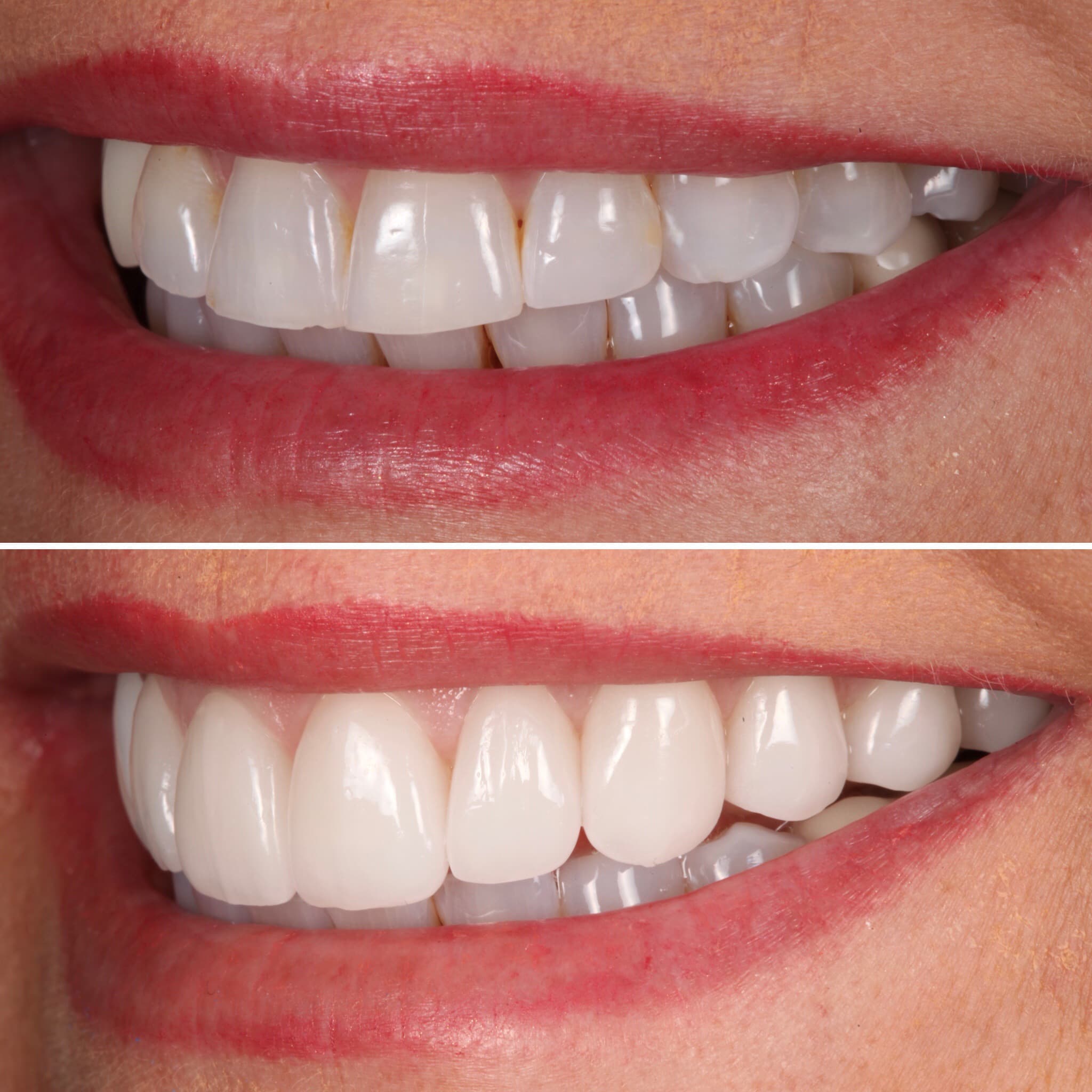
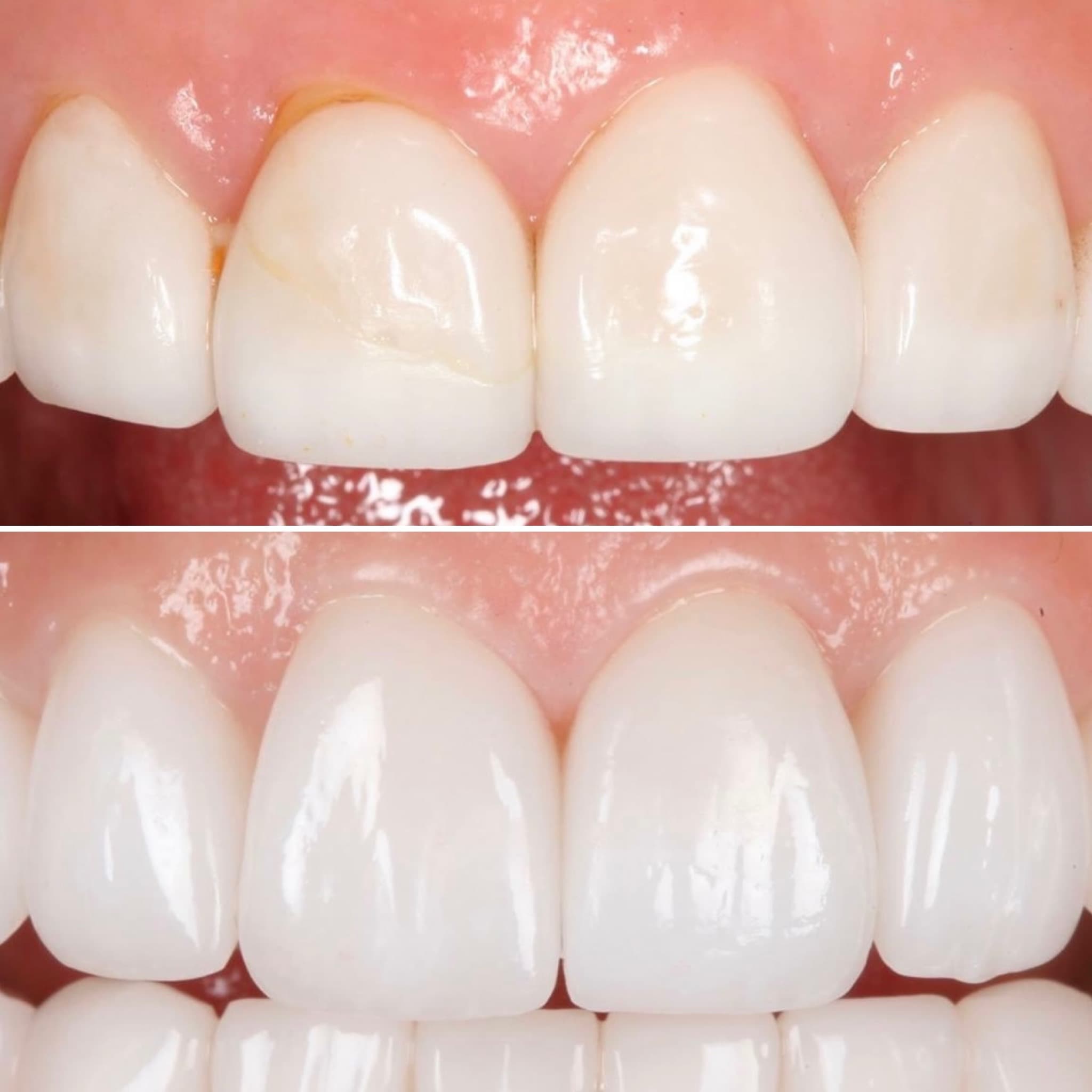
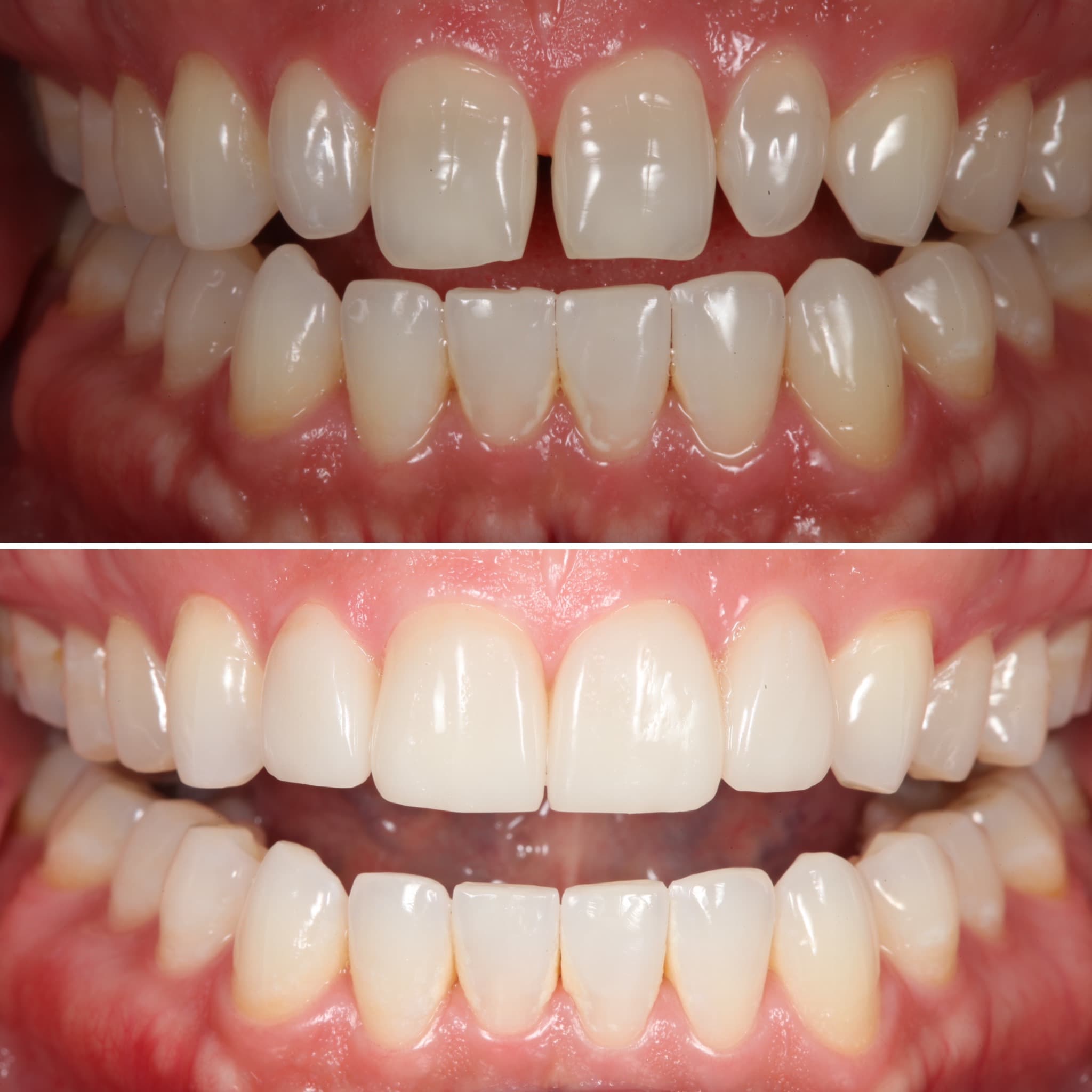
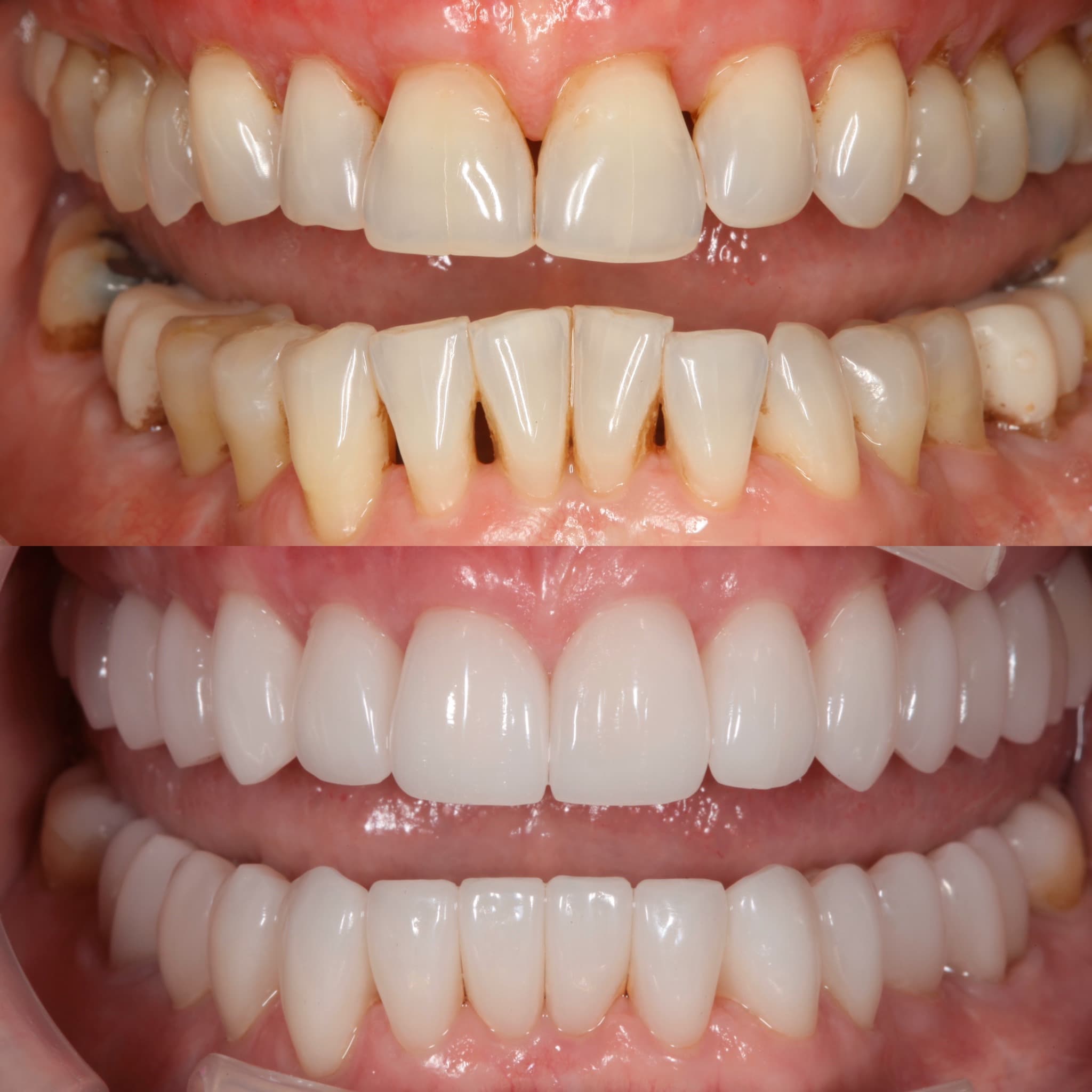
Actual patient results
Every case below is a real Strupp & Brumm patient who gave us permission to share their results. No stock photos. No AI renders.
Related
Compare cosmetic treatment options →
Discuss your goals and alternatives at a Clearwater consultation.
Related
Plan a visit from Tampa Bay →
Visit our Clearwater office from Tampa, St. Petersburg or elsewhere in Florida.
Frequently Asked Questions
- Is your veneer fee all-inclusive?
- Our veneer fee is all-inclusive for the veneer treatment described in your personalized written plan. The plan explains what is included and identifies any separate care needed before veneers. We provide an estimate after evaluating your teeth and goals; we do not publish treatment prices online.
- How long do porcelain veneers last?
- With proper home care and regular hygiene visits, modern porcelain veneers routinely last 15 to 20 years or more. Individual results vary with your bite, habits, and home care. Because we press and finish our veneers in our own lab and verify their fit under a microscope, we are able to control quality at a level most offices cannot.
- Do porcelain veneers ruin or damage your natural teeth?
- Well-planned veneers are a conservative treatment. Some enamel is usually reshaped so the veneer sits flush and looks natural, and that reshaping is not reversible — which is why the planning matters. We remove as little tooth structure as the result allows, preview the design before preparing anything, and will steer you toward a more conservative option, such as bonding or whitening, when that is the better choice for you.
- Will my veneers look fake?
- Natural-looking results are the entire point — and the reason AACD Accredited Fellowship exists as a credential. Our ceramists hand-layer pressed lithium disilicate to reproduce the translucency and subtle color variation of natural enamel. Patients routinely tell us no one can tell their teeth have been restored.
- How many veneers will I need?
- It depends on how many teeth show when you smile and what you want to change. Some patients need only a few; a full smile design commonly involves 8 to 10 upper teeth. We determine the right number together at your consultation, after examining your smile line and bite — not from a photo.
- I live out of state — can you still do my veneers?
- Yes. We regularly treat patients who travel to Clearwater from across Florida and beyond. We are about 20 minutes from Tampa International Airport and can sequence a veneer case into a manageable number of visits. Our front-desk team will help coordinate the logistics of your trip.